

Service category
Civil and Renovation Works in Hyderabad
Masonry, plastering, flooring, waterproofing, plumbing and renovation, handled by one team.
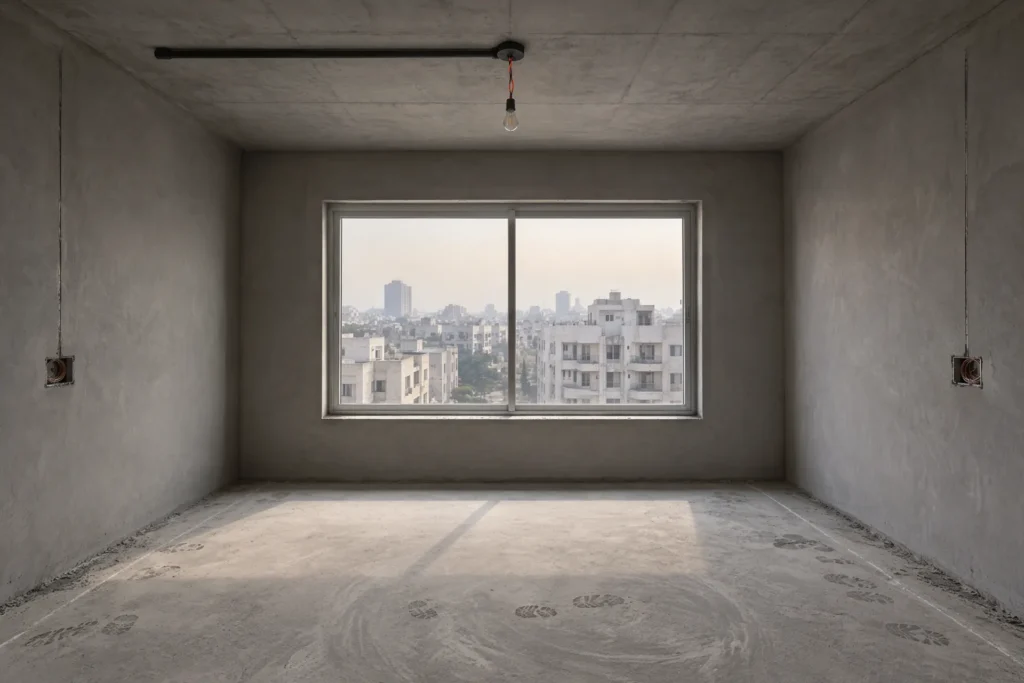
Interiors are only as good as the structure beneath them. A beautiful ceiling hides a leak badly, a fine floor sits poorly on an uneven base, and fresh paint peels from damp plaster. Reliable civil and renovation works in Hyderabad are the quiet foundation of every finished home, and they are the work most likely to cause delay and disagreement when handled by many separate hands.
What we handle
- Brickwork and masonry for new partitions, openings and repairs
- Plastering for smooth, durable walls and ceilings
- Flooring and tiling in tile, stone and other materials
- Waterproofing for bathrooms, balconies, terraces and sunken areas
- Plumbing for supply, drainage and fixtures
- House renovation for older homes needing larger change
Services in Civil & Renovation Works
 Brickwork and masonryPartition walls, openings, repairs and alterations done neatly, with respect for the building's structure.Learn more →PlasteringSmooth, level plastering for walls and ceilings that takes paint beautifully and lasts.Learn more →Flooring and tilingVitrified tile, marble, stone and wooden flooring laid level, with neat joints and proper preparation.Learn more →
 WaterproofingWaterproofing for bathrooms, balconies, terraces and walls, to stop leaks and damp before they harm your interiors.Learn more →PlumbingConcealed pipework, bathroom and kitchen fittings and leak repair, tested before walls are closed.Learn more →House renovationHouse renovation for older homes: repairs, plumbing, flooring, plastering and finishing, managed in the right order by one team.Learn more →
HOW WE WORK
From first visit to handover
The same clear path for every project.
Visit
We see your home, measure every room and listen to how your family lives.
Design
You see layouts, realistic visuals and a material board, and we refine them with you.
Quote
The design is turned into a written quote that lists the work and the materials.
Build
Our team carries out every trade on site, with checks at each stage.
Handover
The home is cleaned, styled and handed over, with care instructions for the finishes.
Related service categories
 Painting and Finishing Works in HyderabadInterior and exterior painting, wallpaper and wall finishes, with the surface preparation beneath them.Learn more →
 Complete Interior Solutions in HyderabadDesign, planning and finishing for the whole home, so every room belongs to one story.Learn more →
 Pest Control Services in HyderabadProtection for your home, including termite treatment after construction.Learn more →
FAQ
Questions we hear
Do I need civil work for a simple interior makeover?
Not always. Many makeovers need only minor repairs, but we inspect first, because hidden damp or uneven surfaces affect the finish.
Can you remove or move walls?
Non-structural walls can often be changed. Structural walls need engineering advice and, in apartments, building permission.
How long do civil works take?
It depends on the scope. We give a schedule with the quote, including drying and curing times.
Who decides if a wall is structural?
A qualified structural engineer should assess it. We do not alter load-bearing elements without that advice.
How long does a bathroom renovation take?
It depends on scope, but waterproofing and curing add time. We give a schedule for the specific job.
Can civil work be done in an occupied home?
Yes, with staging and protection, though noise and dust are unavoidable.
READ MORE
The full guide
Everything about civil & renovation works, from planning to handover. Open any topic to read more.
Why civil work comes first
Almost every interior project starts with some civil work: closing or opening a wall, levelling a floor, repairing plaster, fixing a bathroom leak or moving a plumbing line. This work is messy and needs time to cure or dry, so it has to be done before carpentry, ceilings and painting begin. Done properly and in the right order, it makes everything that follows smoother.
What we handle
- Brickwork and masonry for new partitions, openings and repairs
- Plastering for smooth, durable walls and ceilings
- Flooring and tiling in tile, stone and other materials
- Waterproofing for bathrooms, balconies, terraces and sunken areas
- Plumbing for supply, drainage and fixtures
- House renovation for older homes needing larger change
Planning the sequence
Renovation goes wrong when the order is wrong: painting before plumbing, flooring before the ceiling is done, or electrical work after walls are closed. We plan the sequence on a schedule: demolition and masonry first, then plumbing and electrical routing, then plastering and waterproofing, followed by flooring, ceilings, woodwork and finally paint and lighting.
Structure and safety
Some walls carry load, and removing or cutting them without proper advice can harm the building. We do not alter structural elements without a qualified structural engineer's opinion, and in apartments we check the building's rules and any approvals required before work begins.
Living with the work
Civil work is the noisiest and dustiest stage. We protect finished areas, cover furniture, contain dust where possible and keep to the agreed working hours of your building or society. We also tell you in advance when water, power or access will be affected.
One team, one schedule
Handling civil work with the interiors means one schedule and one point of accountability. The same team that levels your floor knows what cabinets will stand on it. Ask about it as part of our complete interior solutions.
What civil and renovation works in Hyderabad cover and why order matters
Civil and renovation works in Hyderabad cover everything that happens to the fabric of a building before decoration. That includes demolition, masonry, plastering, waterproofing, plumbing, flooring and tiling, and sometimes structural repairs. Each stage prepares the next, and mistakes in an early stage show up in every later one.
Consider a bathroom. The slope of the floor, the waterproofing, the drain position and the tile layout must all agree. If the slope is wrong, water stands. If the membrane is poor, the ceiling below stains. If the tile layout ignores the drain, cuts look clumsy. Planning the bathroom as one system avoids all three.
Dust, noise and communication during civil work
Civil work is the stage that disturbs households most. We agree working hours, protect lifts and corridors, seal doorways and clear debris regularly. We also tell you ahead of time when water or electricity will be off. For general background, see civil engineering on Wikipedia.
To explore specific work, read about waterproofing, plastering and house renovation.
A sample sequence for civil and renovation works in a bathroom
A bathroom shows how the order of civil and renovation works matters. Demolition and debris removal come first, then rerouting of pipes and drains. Masonry repairs follow, then plaster on walls. Waterproofing is applied to the floor and lower walls, cured and tested by ponding. Tiles are then laid on the floor and walls, with planned layouts around niches and drains. Fixtures are fitted last, and silicone seals the joints.
Keeping quality high during civil and renovation works
Quality depends on supervision. Check levels, slopes and joints at each stage and photograph them before they are covered. Ask for a written note when each stage is complete, so the next trade starts on a sound base. Keep working areas tidy and protect finished areas as you go. These habits keep civil and renovation works predictable.
Documents to keep after civil work
Keep photographs of concealed pipes, the ponding test record, the waterproofing method and warranty terms, plaster and tile batch details and any structural advice you received. These papers help future repairs, help a buyer understand the home and prove that the work was done properly. Ask your team to compile them as part of the handover.
Questions to ask any civil contractor
Ask who is responsible for structural advice, how waterproofing is tested, how curing and drying times are scheduled, how dust is controlled and how daily progress is reported. Ask for the scope in writing, with the materials named. For civil and renovation works in Hyderabad with clear answers, book a consultation.
Where to read next
If you are repairing walls or changing layouts, read brickwork and masonry and plastering. For floors, see flooring and tiling. For leaks, read waterproofing and plumbing. For older homes, see house renovation.
Ready to plan your home?
Visit our studio in Manikonda or invite us to your site. Tell us about your home and we will get back to you on WhatsApp.
Manikonda · Narsingi · Gachibowli · Kondapur · Madhapur · Kokapet · Financial District · Jubilee Hills · Banjara Hills · Tellapur